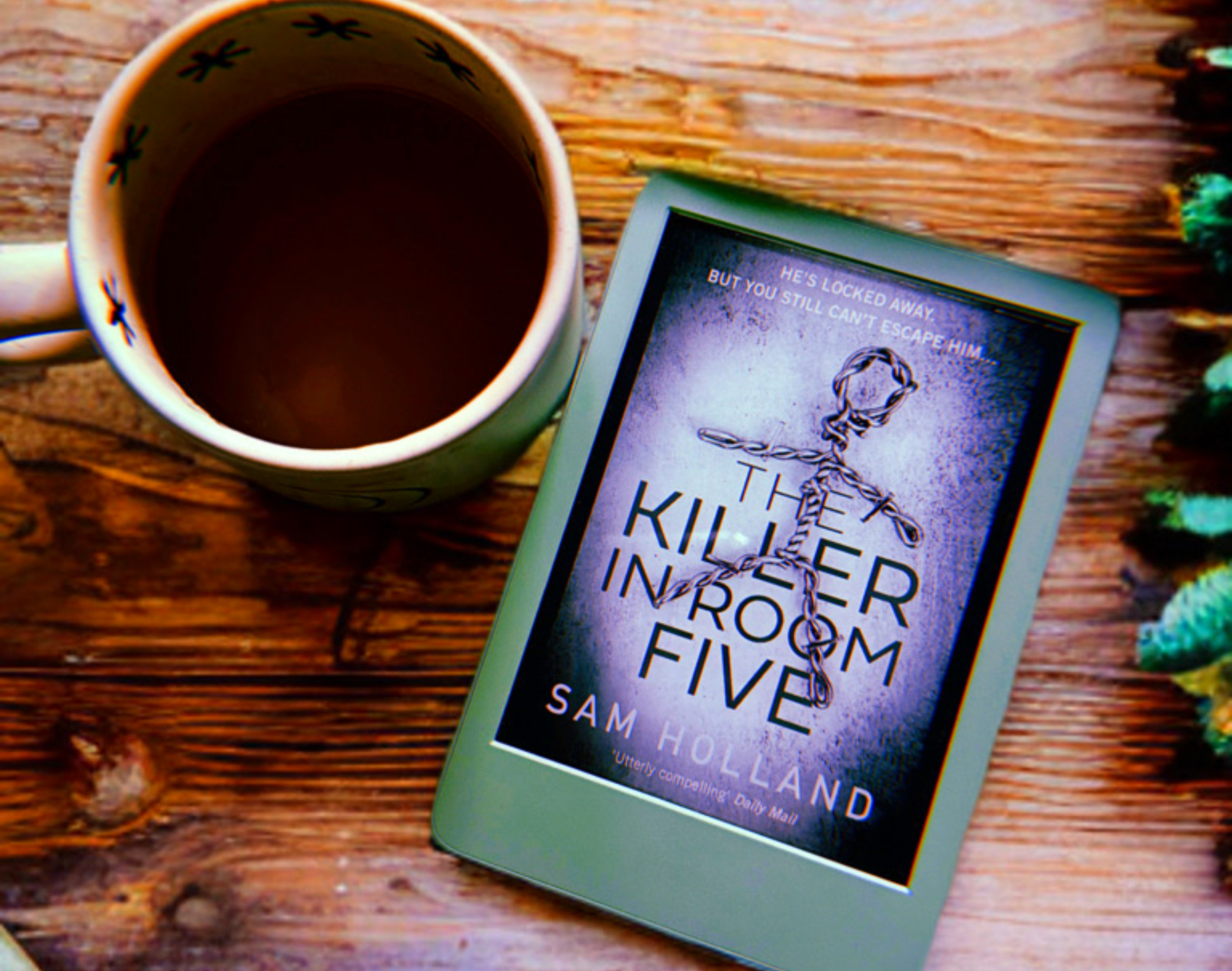
After DNF’ing The Butcher’s Wife due to a severe case of boredom, here I am giving Sam Holland a chance.
A patient locked inside a secure psychiatric hospital confesses to a brutal murder he couldn’t possibly have committed. Yet Joe Sinclair knows details about the crime that only the killer should know.
As Detective Abby Fox returns to work after a suspension, she finds herself pulled into a chilling investigation that makes no sense on paper but becomes impossible to ignore. Is Joe a murderer, a witness, or the only person who can stop a killer still on the loose?
The Killer in Room Five is a dark, twist-filled thriller built around an impossible crime that kept me questioning what was really going on.
This book was a bit triggering for me because our main suspect is in a psychiatric facility and has already attempted to take his own life twice. Given where I am mentally right now, those topics definitely sent my anxiety through the roof. A lot of readers say they flew through this book, but that wasn’t my experience.
For a large portion of the story, we stay heavily focused on the investigation, circling around suspects and clues, while I kept waiting for the plot to really kick into gear. I love thrillers and mysteries, but I’m not always the biggest fan of investigation-heavy stories, so I struggled to fully connect with this one.
There’s a possible serial killer, horrific crimes in both the past and present, and it’s clear that the two timelines are heading toward a collision. Still, my main curiosity was simply finding out who was killing these seemingly random people.
I also spent a good chunk of the book waiting for the mind-blowing twists that everyone on Goodreads seems to rave about. That said, things definitely became more interesting after the 50% mark, and I found myself more invested from that point on.
I was somewhat surprised by the killer’s identity, but unfortunately, the reveal didn’t completely work for me. The story did raise my anxiety levels, though that’s largely because I’m currently doing ERP therapy and some of the themes hit close to home. In a strange way, it pushed me deeper into the work I’m doing, which is ultimately a positive thing for my recovery.
As for the book itself? Sadly, this one was a flop for me. But hey, we can’t all love the same things.

Leave a Reply